Richmond
The history of Richmond and Tuckahoe Plantation is inseparable from the James River, which shaped settlement, commerce, and power in early Virginia.
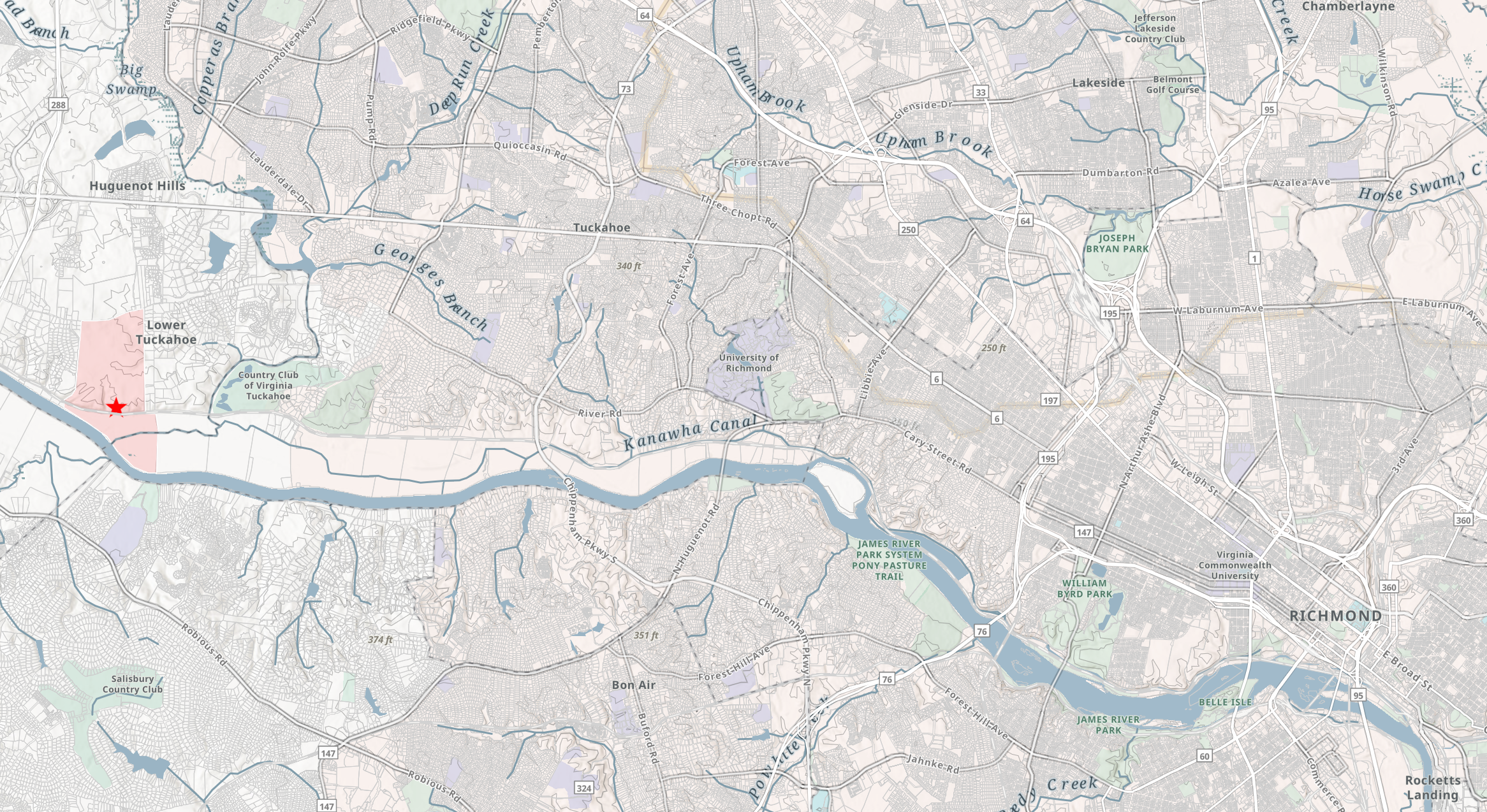
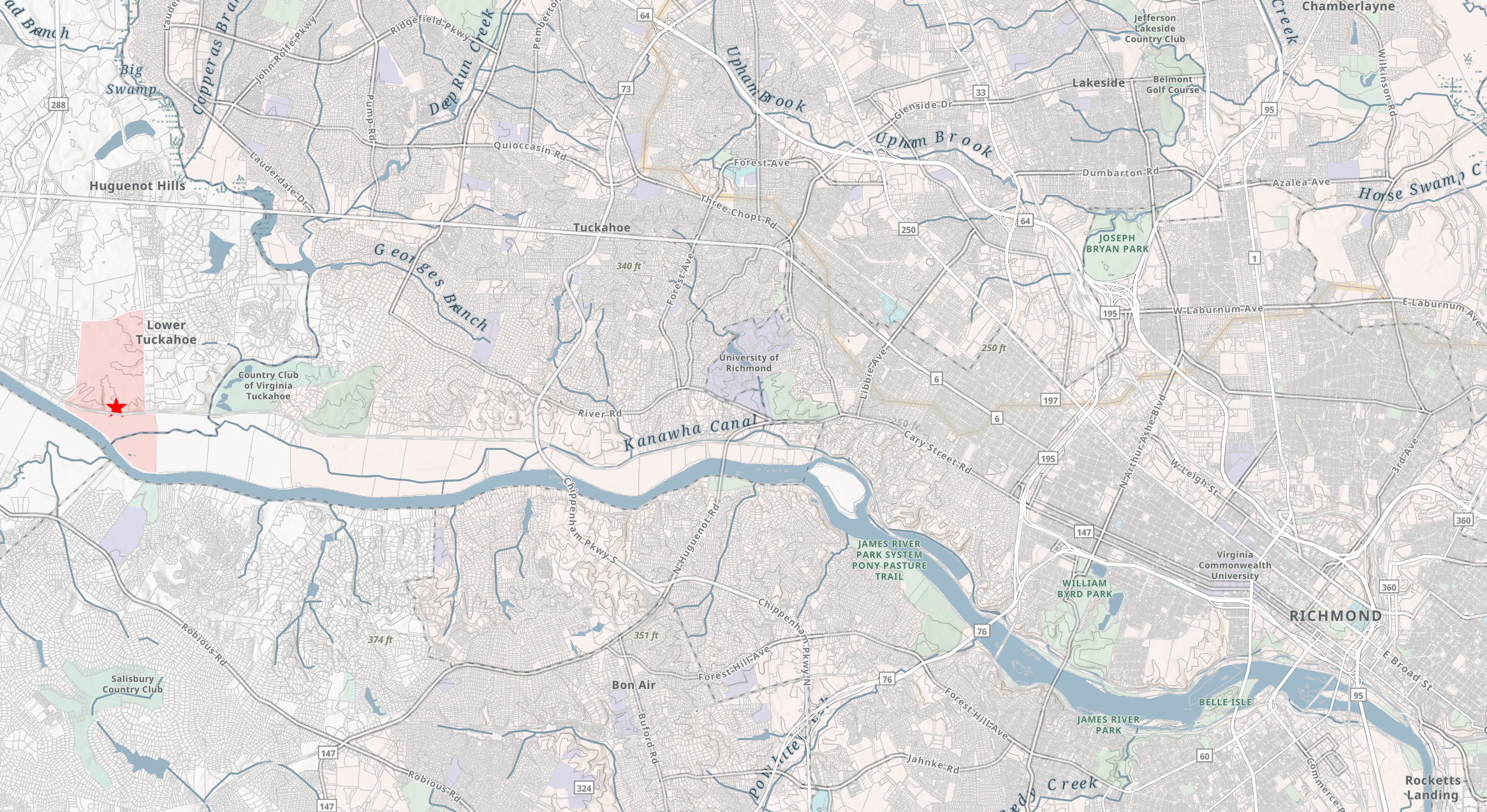
Richmond emerged at the fall line of the river, where navigation from the tidewater ended and inland travel began, making it a natural center of trade. Just upriver, Tuckahoe was established in the early 18th century as part of a network of plantations that depended on the river for transportation and economic life. Goods, people, and ideas moved along the same waterway, linking rural estates to the growing colonial town.
Built in the 1730s by the Randolph family, Tuckahoe reflects the structure and influence of Virginia’s planter class. It is most notably the boyhood home of Thomas Jefferson, who lived there during a formative period of his life. At the same time, Richmond was evolving from a modest settlement into a regional center of commerce and governance, supported by the surrounding plantation economy, including estates like Tuckahoe.
During the American Revolution, Richmond rose to prominence when Virginia moved its capital there in 1780, seeking a more secure inland location. Jefferson contributed to the design of the new capitol, reinforcing the connection between the political leadership of the new nation and the plantation society from which it emerged. Tuckahoe existed within this same world, tied socially and economically to the individuals shaping the republic.
In the early 19th century, Richmond expanded rapidly as both a commercial and industrial center. The river and canal system extended trade westward, strengthening the city’s role as a gateway between regions. Plantations like Tuckahoe continued to operate within this broader system, supplying agricultural output while maintaining the architectural and cultural traditions of an earlier era.
The American Civil War marked a turning point, with Richmond serving as the capital of the Confederate States of America and a central hub of government and industry. The James River again played a critical role in defense and supply. In 1865, as Confederate forces evacuated, much of Richmond was destroyed by fire.
Tuckahoe, located outside the city, remained largely untouched. While Richmond was rebuilt and reshaped in the years that followed, Tuckahoe endured with its original structure and landscape intact. Today, Richmond reflects layers of growth from colonial outpost to modern capital, while Tuckahoe stands as a preserved link to Virginia’s early history, together telling a continuous story shaped by the river, the revolution, and the war.