Tuckahoe
Tuckahoe, the boyhood home of Thomas Jefferson, represents a significant and enduring piece of both American and Virginia history. Jefferson lived here from 1745 to 1752, during which time his father managed the estate, placing him within one of Virginia’s early plantation landscapes at a formative stage of his life.
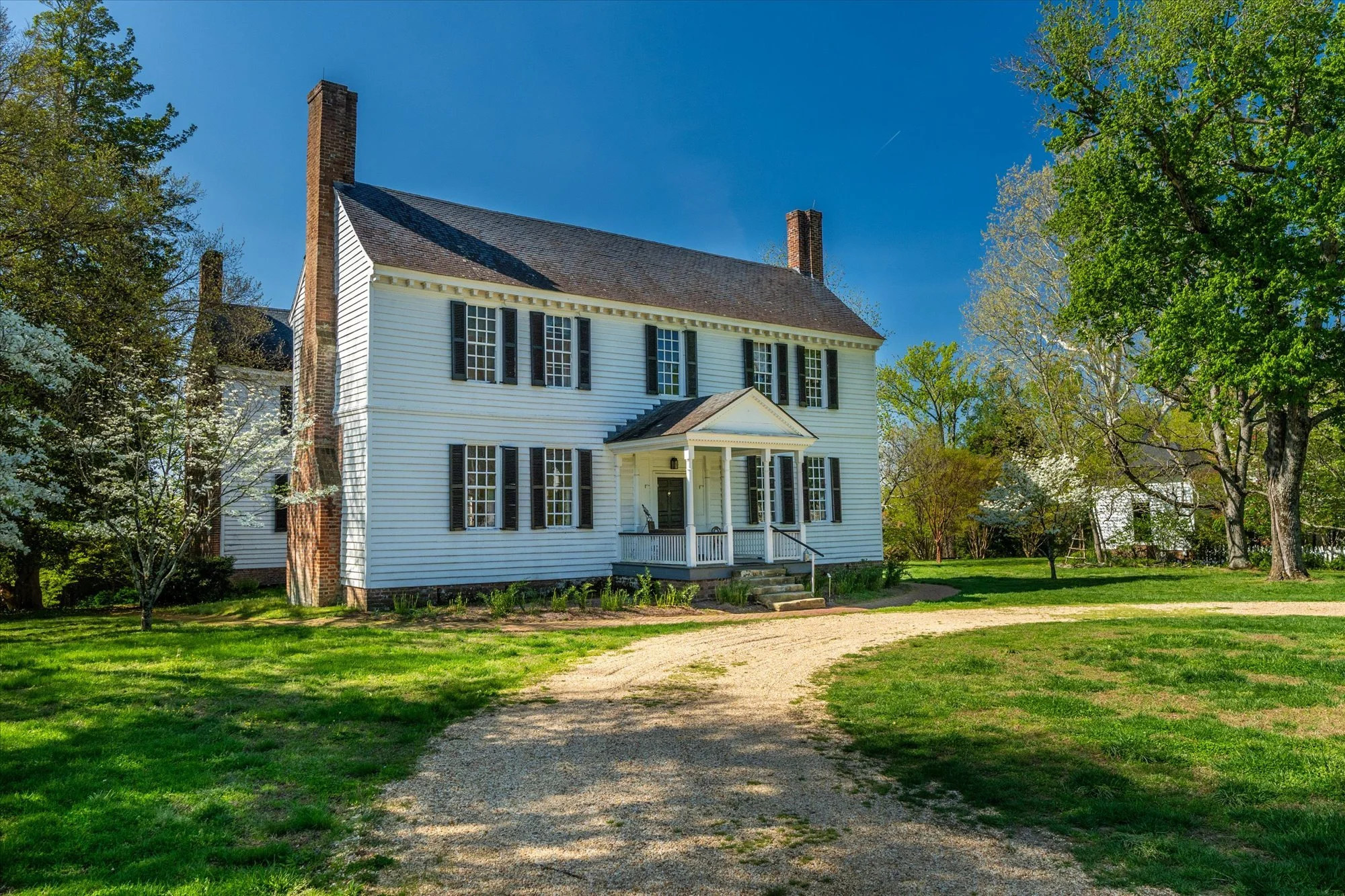
Constructed circa 1733–1740, the main residence is defined by its rare H-shaped plan, an uncommon architectural form in colonial America influenced by English precedent. The home retains a high degree of original material, including period windows, detailed entrances, and extensive early woodwork, with much of its original layout still intact.
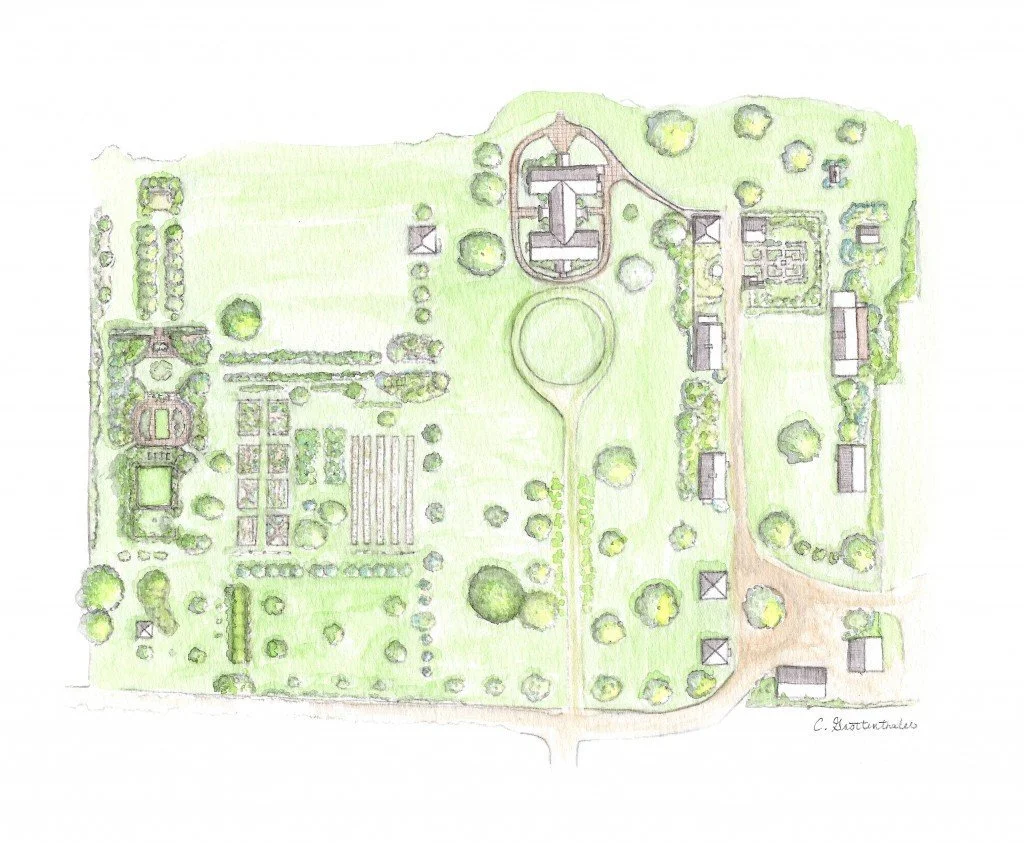
Set on approximately 568 acres along the James River, the property includes formal grounds, historic outbuildings, and a landscape that has remained largely unchanged for generations. From its elevated position overlooking the river to its long, tree-lined approach, the setting continues to reflect its original design and use.
Designated a National Historic Landmark, Tuckahoe survives today as a remarkably intact example of early American architecture, land use, and history.